Optimising UV inks for the modern flexo sector is an ongoing challenge, with sustainability issues such as recyclability, and curing performance all on the agenda.
The impact that printing inks can have upon the recyclability of packaging and label materials is a significant issue within the industry, and one that becomes more complex when those inks are UV cured.
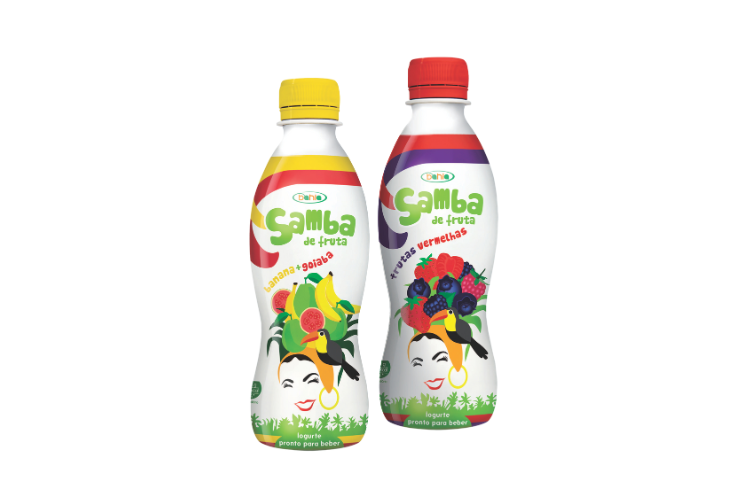
Shrink sleeves printed with Siegwerk’s UV inks
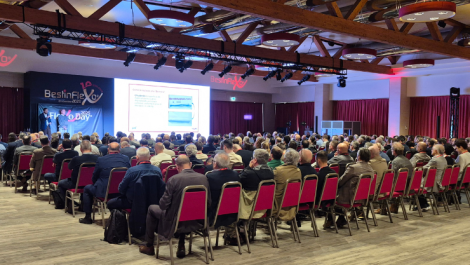
This was a topic that was addressed by Jonathan Sexton, marketing director for narrow web and screen at Sun Chemical in a presentation given at the recent UV Days event in Germany, organised by IST Metz.
In his session, Mr Sexton sought to redress a general belief that UV inks cannot be de-inked to enable recycling of the substrate – something he insisted was not supported by data.
Independent validation of testing by Sun Chemical and other ink companies has shown a variation in results depending on several factors, he said, including the type of paper or film that has been printed on, whether a coating has been used, and whether the curing was UV or LED UV. It is therefore a complicated picture, but results suggest that some materials, in some circumstances, can be recycled after being printed with UV inks.
“Our tests show that UV inks are de-inkable and recyclable, and this changes the perception in the market that UV is bad for recycling,” Mr Sexton summarised.
Retain and remove
The ink companies continue to develop solutions to these issues, including attempts to create inks that can be detached in a caustic wash from PET-C materials for shrink sleeves.
Mr Sexton says that ink removal or ink retention performance during recycling is among the top development priorities for UV flexo inks, whether Hg-UV or UV-LED, alongside compliance with rapidly evolving regulatory frameworks, and optimising the cure of an ink under the relevant UV source for a required application.
More on those other factors soon, but in terms of deinking or ink retention in the recycling process, it is worth outlining briefly what recyclers are trying to achieve here in different applications.
To begin with, as Barbara Paterson, technical director at Paragon Inks, points out, it is not the actual inks themselves that are being recycled. “An ink is not recycled back to virgin liquid form so that it can be reused on a printing press; it is the packaging as a whole that is recycled. The main aim of recyclers is to reduce waste, conserve resources, and protect the environment by reprocessing used materials into new products.”
Ms Paterson believes it essential to understand the different processes for fibre and plastic packaging, with the former utilising three types of mill – standard, flotation deinking and specialised mills for handling complex fibre-based packaging – while the latter has two primary methods: mechanical separation of the inks or incorporation of ink into the recyclate.
Ink might need to be removed or retained, therefore. For example, when the material that needs to be recycled is a PET shrink sleeve applied to a PET bottle, the need is for the ink to be removed without discolouration of either the PET flakes or the wash solution, allowing for the recovery of clean PET for recycling. This is especially important for PET-C labels, which can be recycled with the PET from the bottle.
“In the future, deinking of polyolefin self-adhesive labels may also be desired or required to allow more complete recycling,” says Mr Sexton.
By contrast, generally with self adhesive labels applied to recyclable bottles or containers, the need is for ink retention – that is, for the ink to remain adhered to the label when it gets removed from the container, without bleeding or discolouring either the wash solution or the recovered material.
Fibres and films
Deinking from paper substrates is an entirely different scenario to film, with tests often carried out using Ingede 11 methodologies or the CEPI 2.0 recycling method for carton packaging.
Sun Chemical reports that numerous of its products, including SunCure Starluxe and SunCure FLM with SunCure LM UV Coating have tested successfully for deinking according to Ingede 11.
Likewise, hubergroup says its iray UV inks have been validated internally with test methods from Ingede and others, and states that many iray ink systems can be removed cleanly from both paper and film substrates. Its latest generation of iray inks, iray MGA LED, is optimised for food packaging and LED curing, the company says.

“Our tests show that UV inks are de-inkable and recyclable, and this changes the perception in the market that UV is bad for recycling.” – Jonathan Sexton, Sun Chemical
Flint Group launched its Evolution Deinking Primer as an option for printers looking to produce high quality recyclable shrink sleeves. It is accredited by the Association of Plastic Recyclers.
“Applied to CPET shrink sleeve materials, the primer keeps ink securely attached during the product’s life but allows it to be safely released in a caustic bath during recycling,” explained Anna Niewiadomska, marketing manager for narrow web at Flint Group. “The primer coating ensures that crystallisable PET shrink sleeves sink to the bottom of the washing tank while the ink floats to the top. This process allows PET flakes to be collected in a clean yield, potentially increasing recycling yield by up to 10%.
“Integrating such UV-curable solutions is a key step for the industry to overcome recyclability barriers and close the loop on plastic packaging.”
Rules and regs
Of course, the entire industry, and the ink manufacturing side specifically, is subject to a great deal of legislation, with PPWR and Design 4 Recycling being prominent. At the start of 2026, the German Printing Ink Ordinance (GIO) for food contact materials comes into force after a four-year transition period. It brings forward a list of around 500 permitted substances and defined migration limits and applies to all inks, varnishes and adhesives used in food contact materials.
Siegwerk is one ink company that has been preparing for GIO, offering Sicura NutriflexLEDTec, a low migration UV LED flexo ink system that is suitable for GIO-compliant primary food packaging, and Hansruedi Nef, product manager for narrow web at Siegwerk, comments: “GIO will be even more comprehensive and restrictive than other regulations that have been in place for years in the packaging and label printing industry, such as the Swiss Ordinance 817.023.21.”
Darren Hallett, director for Europe Business Development UV Flexo at hubergroup UK, says such developments mean ink manufacturing businesses must continuously evaluate raw materials such as photoinitiators to ensure safe and sustainable products. He said: “With current and future legislation, the overall choice of raw materials – including photoinitiators – is reducing. For us as an ink company, this means that we need to be more creative with our research and development to ensure we differentiate ourselves from our competitors.”
An additional milestone relative to UV curing identified by Mr Nef of Siegwerk is the next reassessment of the use of conventional UV arc lamps according to the Minamata Convention, which is due to take place in February 2027. This could see new installations of such technology prohibited and a transitional period entered into for existing installations to convert to LED-UV, which is compliant to the convention.
Keeping and curing
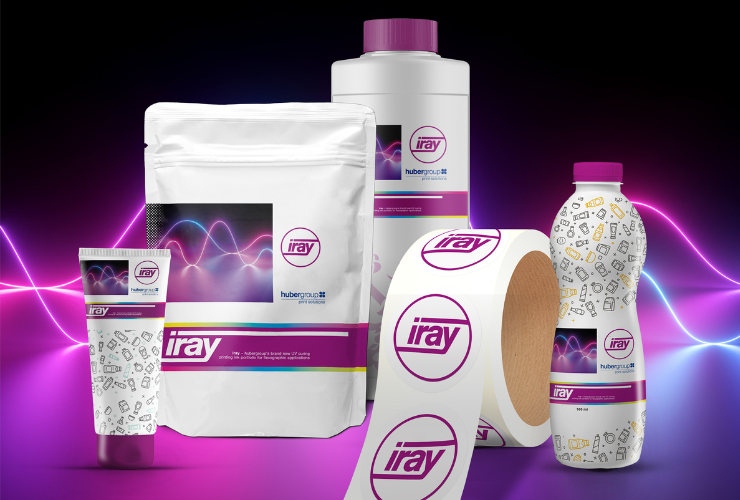
hubergroup’s iray UV flexo portfolio
The final point with the development of UV inks mentioned earlier comes in optimising the cure that is possible. Achieving it involves balancing variables such as ink formulation, photoinitiator selection, and substrate compatibility to ensure optimal performance across a range of press speeds and curing intensities. It often requires collaboration between ink manufacturers, lamp suppliers, and press operators.
However, printers have an important role too, says Hansruedi Nef of Siegwerk, where LED-UV or dual cure inks are involved, in ensuring their performance is not accidentally impaired. He adds: “Due to their high reactivity, it is particularly important to protect LED-UV inks and coatings from environmental influences such as daylight, oxygen, and high temperatures during handling. For example, containers should be resealed immediately after use. Products such as transparent white or lacquers are particularly at risk of unintentionally absorbing visible light or scattered light from lighting or drying systems.”