The packaging production agencies SGS and SGK were announced as united under the new entity of Propelis in May of this year. Andy Knaggs spoke to leading executives about plans for the new near billion-dollar business.
So, finally it happened. At the start of May this year came the announcement that the brand and packaging production agencies SGS & Co and SGK were to merge under a single name – Propelis – and with a common purpose. For some, it seems, it was about time.
“I think the industry has been expecting this for a number of years,” Gary Kohl, formerly president of SGK and now CEO of Propelis, told FlexoTech. “This merger has been discussed between prior ownership on probably five or six different occasions over the last 20 years. So, I don’t think it struck any of our clients or any industry observers as a surprise. The timing finally worked for both parties to be able to put this together.”
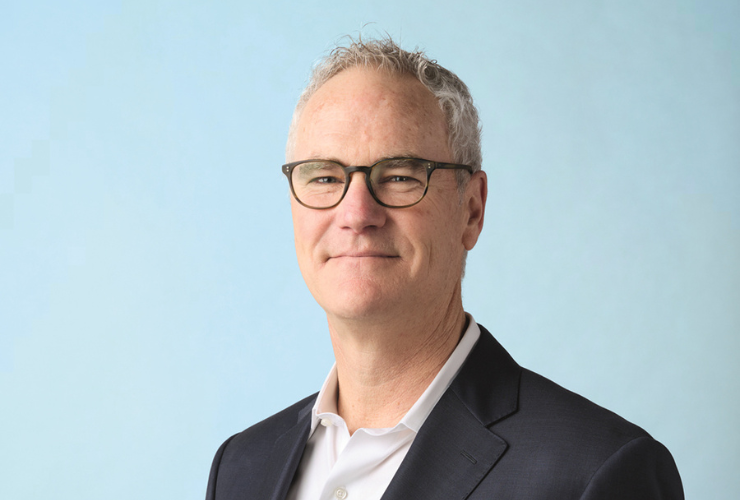
“We’re taking a closer look at operational and commercial next steps in order to continue to blend the companies in a way that benefits our clients.” – Gary Kohl
The new business, with 10,000 employees in more than 30 countries, and annual revenue of nearly $1 billion (€850m), is clearly a major player in the packaging and brand production space. It seeks to pursue a “line of business” approach in which packaging graphic production, including flexo plates, is only one line (called SGX), amongst creative and strategy (Marks), merchandising, signage and large format print (Collide) and smart technologies for automation and workflows (5Flow).
Speaking to FlexoTech only about 60 days into the integration process, Mr Kohl was honest that there is a lot of work still to be done. He said: “We have our senior leadership in place at this point: a blend of the best of both companies around the world. We are starting to integrate some of our platform from a technology and an operational standpoint around the world, and we’re taking a closer look at operational and commercial next steps in order to continue to blend the companies in a way that benefits our clients.”
Of the line of business operating model and global platform, Mr Kohl expands a little further, saying that Propelis expects this to drive supply chain simplicity for clients that are grappling with an extraordinary pace of change. “The vast majority of our clients want to shrink the number of premier partners that they’re working with around the world. I think Propelis is uniquely positioned to address those needs, staying ahead of where our clients need us to be.”
He added: “We really think that our value chain captures the vast majority of the channels that our clients want to use to talk to their end consumer.”
Convincingly global
Geographically, the fit between SGS and SGK is expected to be good, bringing strength in North America largely through SGS into partnership with greater European and Asian presence through SGK. The offering for clients will therefore be much more convincingly global.
“A lot of the CPGs (consumer packaged goods) and multinational food and beverage companies that we work with want that combination of centralised scale, partnering with whoever has the best capability set around the world, with their local regions being able to work on an individual basis with people that understand the local market, that can get things done very, very quickly, but stay on brand, stay within the corporate governance around workflows, etc. Propelis really drives that ability around the world. We have close to 10,000 employees, and many of those employees are client facing, and we believe it really gives us an advantage in the marketplace. On the flexo side, this is a one plus one equals three scenario because of the way that our platform is set up.”
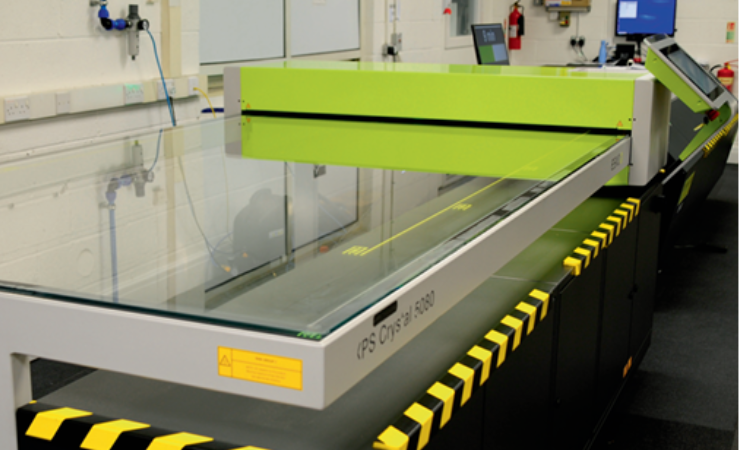
The SGX Print Solutions line of business is headed up by Wes Bradford as president. Its remit incorporates much more than flexo and artwork production, including also rotogravure and metal deco solutions. Both SGS and SGK had flexo prepress facilities. Is it simply a case of utilising these under a different name?
“No, it’s much more than that,” says Mr Bradford. “We can go all the way to the beginning. In order to have a successful image carrier, you have to have a good partnership with the print community. You have to understand what the clients are looking for on pack. You also have to understand that the technology, the fingerprinting, the print quality management, the profile creation, the curves, etc, that go into the end product are critical to success. With Propelis, and SGX specifically, we have all of the expertise. We have all of that knowledge now from the leading suppliers in the world. We bring that together, and we can take the best of both solutions, bring it together and deliver globally in a way that no-one’s ever been able to do.”
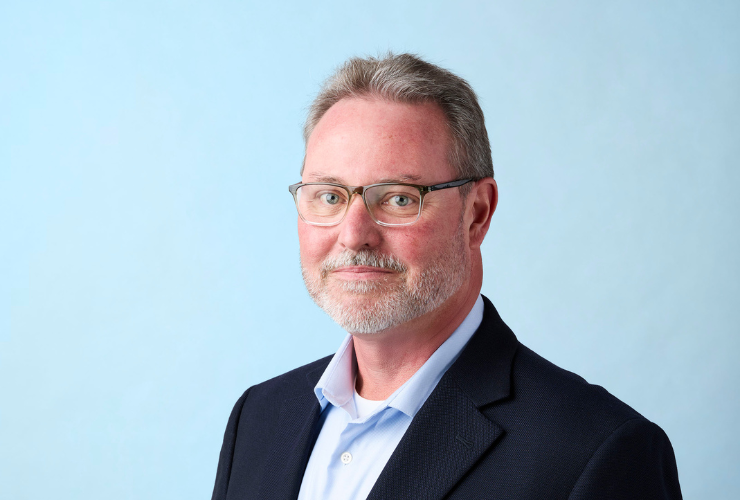
“We can take the best of both solutions, bring it together and deliver globally in a way that no-one’s ever been able to do.” – Wes Bradford
This might mean that for a global client that would like their packaging to be consistent around the world, SGX can deliver with the same quality and consistency throughout, in geographic areas that either SGK or SGS might not have been able to service prior to the merger. It can also service more locations of the larger print groups around the world with the same consistency.
“As SGX, we can provide that much better than either company could have done separately, and we can still work on a targeted approach in-region to service the smaller clients and printers as well,” said Mr Bradford.
Technology investments on the flexo side will certainly come, and across many different platforms – software, hardware, polymer, solvent. “All are on the table and will be explored and utilised within SGX Print Solutions,” Mr Bradford confirmed.
Man and machine
Gary Kohl goes a little further on this, explaining that the new business will be evaluating its client-facing technology in the flexo space. “There are a couple of pockets in our platform that have some unique capabilities in terms of how we interact with our clients. The always on model where a client can come into a portal, order some more plates at 2am on their third shift, and have those plates ready the next morning – we think that that obviously is where the industry is heading.
“We firmly believe that clients are always going to want to be able to work with a human who really understands their work. AI and the rest of the advances in the technology space have certainly helped some of that, but we’ve found that humans are still critically important to the process. In the meantime, there are also some really exciting developments in terms of how we interact with our clients, even in the flexo space.”
Propelis has already brought together a fully-fledged AI team from across both organisations, and it is no surprise to hear Mr Kohl say that “AI will touch every single part of our business”.
“We have to strike the right balance between standardisation of inputs for our clients around the world, but also providing them plenty of flexibility, because every single client that we work with is a little bit different,” he continued. “AI has already started to help us in that space. We also are very cognisant of the fact that we have certain clients that love certain existing tools across the two companies, and so we have committed to be very mindful as we start to bring these existing tool sets together, to truly take forward the best of them as we settle on our technology roadmap.”
Looking ahead, Mr Kohl said there was excitement within Propelis as to the prospect of determining its own roadmap going forward and shaping its services to meet the demands of the industry. “We view the future as extremely bright,” he said. “Building on a business of almost a billion dollars of revenue is extremely exciting for us and we are very keen to keep moving forward.”