
A strategic analysis of carbon footprint requirements, competitive advantages, and the critical role of integrated Enterprise Resource Planning systems in driving sustainable packaging innovation.
The global packaging industry stands at a pivotal moment where sustainability is no longer optional but a critical business imperative. As requirements to measure and track carbon footprint intensify across major markets, and as customer expectations shift toward low-impact products, packaging companies face rising pressure to demonstrate real environmental leadership while remaining competitive.
For manufacturers, the urgency to meet net zero targets by 2050 is accelerating under stricter regulations and growing demand for transparent, sustainable practices. This shift requires more than operational tweaks – it calls for a new foundation that embeds sustainability into everyday decision-making.
Enterprise Resource Planning (ERP) systems have emerged as that foundation. They have evolved far beyond traditional back-office tools into intelligent sustainability platforms that enable companies to track, manage, and reduce their carbon impact while strengthening compliance and competitive differentiation.
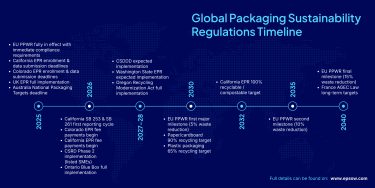
A Complex Global Landscape of Regulations
Understanding the evolving regulatory environment is essential for packaging companies developing effective sustainability strategies. Requirements are expanding quickly, and the pace and scope differ across regions.
The European Union continues to set the global benchmark through the Corporate Sustainability Reporting Directive (CSRD). This regulation mandates detailed carbon emissions reporting for large EU companies and extends beyond basic disclosures to include Scope 1, 2, and 3 emissions, climate-related risk assessments, and documentation of sustainability initiatives.
In North America, regulatory activity is progressing at the state level. Extended Producer Responsibility (EPR) programs are gaining momentum, with Oregon becoming the first state to implement a comprehensive packaging EPR system in July 2025.
Alongside regional legislation, global frameworks are also reshaping expectations. The Task Force on Climate-related Financial Disclosures (TCFD) has transformed how organizations report climate-related financial impact, with more than 4,900 organizations across 103 jurisdictions now supporting its recommendations.
ERP: The Technology Foundation for Sustainability Leadership
Modern ERP systems now serve as the central infrastructure for collecting, analysing, and acting on sustainability data in real time. They unify information once fragmented across systems and teams, enabling packaging manufacturers to make faster, more informed environmental decisions.
Unified Data Management and Real-Time Analytics
A key advantage of ERP-driven sustainability management is the creation of a single source of truth. Material specifications, supplier declarations, and compliance documentation are consolidated in one place, giving teams clear, accurate visibility. Real-time analytics then allow companies to track energy use, material consumption, waste generation, and carbon emissions across their operations.
When integrated with Manufacturing Execution Systems (MES), ERP platforms go further by providing continuous insight into machine cycles, energy intensity, and other production metrics that influence environmental performance. This real-time MES insight enables manufacturers to optimise machine performance and reduce energy use and emissions without sacrificing throughput or productivity – a critical balance for customers pursuing sustainability and efficiency simultaneously.
Automated Compliance and Carbon Footprint Integration
ERP systems also automate complex compliance requirements, offering real-time assessments of regulatory obligations across multiple jurisdictions. Embedded early warning systems flag potential non-compliance issues before they become risks, helping customers avoid disruption, delays, and unexpected costs.
The integration of automated carbon footprint calculations within ERP represents a significant advancement in sustainability management technology, giving customers science-based data without manual effort. Product footprints can be generated automatically using material, process, and supply chain data, supporting CSRD reporting and customer scorecards.
Assigning carbon values to each job or product provides precise visibility and enables clear reporting to customers and stakeholders. This transparency has become a powerful market differentiator, meeting growing customer demand for verified carbon data during procurement and supplier evaluation.
Competitive Advantages: Sustainability as a Market Differentiator
Companies that embed sustainability into their operations through ERP gain measurable advantages in market positioning, customer relationships, and financial performance.
Enhanced Customer Loyalty and Market Access
Sustainable practices have become a core driver of customer loyalty as expectations around environmental impact continue to rise. For many manufacturers and brand owners, sustainability credentials are now baseline requirements rather than optional differentiators. Supplier scorecards, carbon footprint reporting, and compliance certifications are increasingly mandatory.
Customers increasingly expect suppliers to provide reliable carbon and sustainability data as part of every engagement, and ERP-integrated visibility enables manufacturers to respond quickly, confidently, and consistently to these expectations.
Operational Efficiency and Cost Reduction
ERP-enabled sustainability initiatives deliver significant operational and cost benefits. Centralised data and real-time visibility help manufacturers identify waste, reduce energy consumption, and improve resource utilisation.
Material management is a major area of impact for both cost and sustainability. ERP systems track materials more efficiently, optimise inventory, and reduce unnecessary usage. Energy efficiency gains also contribute to lower operating costs, supported by improved production scheduling and continuous performance monitoring.
Strategic Implications: Building Sustainable Competitive Advantage
Integrating sustainability management into ERP systems is more than a technical upgrade – it represents a strategic shift that positions companies for long-term success in a market where environmental performance is increasingly tied to commercial performance.
Future-Proof Innovation
Regulatory expectations and reporting requirements will continue to intensify in the years ahead. Companies with ERP systems that embed sustainability management are better prepared to respond quickly to new rules, maintain compliance, and preserve their competitive position.
ERP-driven visibility also accelerates innovation. By providing real-time insights into environmental performance, these systems help manufacturers identify improvement opportunities, streamline processes, and design more sustainable products. This continuous flow of data supports an operating model that reduces impact while strengthening business resilience.
Conclusion: Leadership in the Age of Sustainability
The packaging industry’s shift toward sustainability brings both challenge and opportunity. Companies that embed carbon footprint management into their ERP systems move beyond basic compliance and position themselves as leaders in a market where environmental performance increasingly shapes commercial success.
ERP-integrated sustainability delivers clear, measurable benefits. Manufacturers report greater efficiency, lower costs, stronger customer retention, and improved access to markets with strict sustainability requirements. With major regulatory milestones ahead in 2025 and 2026, the companies that act now will be best placed to stay ahead of expectations and protect their competitive edge.
Those that adopt ERP-integrated sustainability today will set the standard for a more sustainable and more profitable future for the industry.
Author:
Craig Tait
Chief Product Officer
ePS