The increasing importance of digital printing alongside conventional technologies in the label sector has seen Dantex place great emphasis on its inkjet technologies and the facilities it provides in Corby, UK, for customers to experience them, writes Andy Knaggs.
Dantex launched its digital division in 2016, and ten years later, it believes it has the offering and the understanding of inkjet technology to really deliver what the market demands.
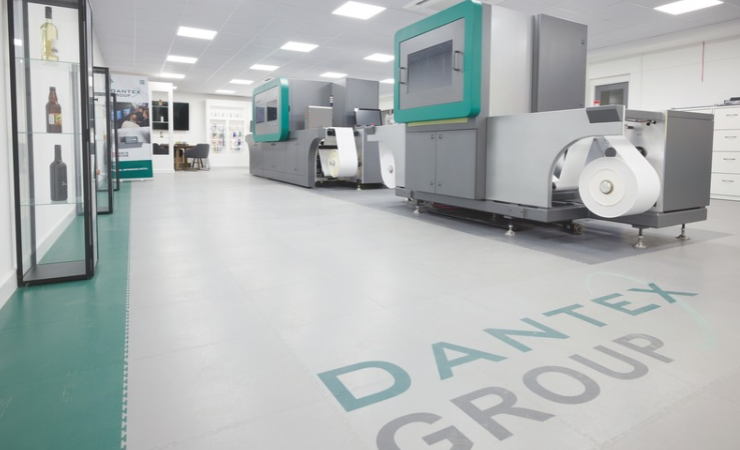
The digital division is based at the company’s Corby facility, in Northamptonshire, UK, and Richard Bunney, Dantex Group managing director, comments: “We live and breathe inkjet here. This is really a showcase for British manufacturing, and we bring customers here from across the globe. They can use it as their own space – to run samples on the inkjet presses, discuss cost calculations, even visit some of our customers nearby, where they can talk to existing customers who are already using the technology.”
The facility is where all the design and manufacturing of Dantex’s inkjet presses – the PicoColour and PicoJet – takes place. It also incorporates an R&D laboratory where future inkjet head technologies are tested with key partners, and the demonstration area where the two press variants are located is run by a technical team who have commercial print experience.
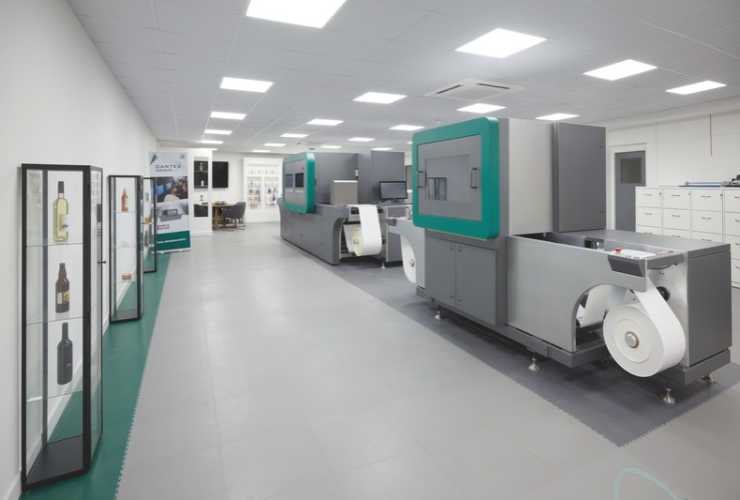 Dantex has been covering both the entry segment of high-speed single-pass inkjet and the high-productivity hybrid segment for many years with the PicoColour and PicoJet systems. Both platforms address the requirements of narrow-web converters producing pressure-sensitive labels and related packaging products. Both have recently been relaunched following a complete redesign, including an all-new user interface and Digital Front End.
– PicoColour – launched at Labelexpo Europe 2025 (now Loupe), PicoColour targets the entry level segment, offering a highly productive machine with state-of-the-art inkjet technology at a unique price-performance ratio. The latest version of the PicoColour makes no compromises on print quality or usability. With its typical monthly print volume, PicoColour can easily compete with significantly more expensive equipment, says Dantex, and is designed for high duty cycle printing.
– PicoJet – the platform can be configured as a roll-to-roll system with up to seven process colours and exceptional white print quality, or as a hybrid system. In the latter case, PicoJet becomes a full converting solution with a wide range of seamlessly integrated options, including flexo stations, die-cutting, lamination and cold foil, to name just the most common. These modules are provided by Dantex’s partner GM, and many users will already be familiar with their operation due to their global reach. PicoJet hybrid configurations meet all requirements for differentiation and can produce fully finished labels in a single pass, at speeds of up to 75 m/min across all print modes.
“When developing these solutions, we have focused on delivering a highly efficient and intuitive user experience for operators, along with a lean and robust design that ensures excellent serviceability and high uptime for converters,” said Mr Bunney.
A noticeable visual element to the presses is the large touchscreen user interface, the PicoPilot, and this is the subject of considerable investment by Dantex as it seeks to simplify operation of the systems, increasingly utilising AI to streamline processes.
“AI is now a lot more sophisticated, and these machines are becoming highly reliant on software,” continued Mr Bunney. “We are really focusing on our PicoPilot interface and that will allow these machines to almost run themselves. The feedback we hear is label converters want output and they have struggled with the recruitment of skilled operators. Hence, we have designed our machines so they are easier to operate.”
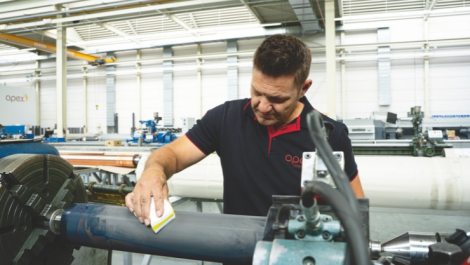
While the PicoColour and PicoJet are often deployed as digital only systems, the PicoJet can be configured as a hybrid press with flexo printing and various converting and embellishment capabilities. Dantex sees this marriage of inkjet and flexo – whether within a single unit or across multiple units within a business – as being very much key to the success of label converting companies. Dantex has its own strong presence in conventional printing technologies through product lines in flexo and dry offset plates and platemaking equipment and flexo sleeves.
Valuable perspective
Having a foot in both traditional and digital printing worlds gives Dantex a valuable perspective on how these will interact and mesh together going forward. Christoph Michel, global commercial director for digital at Dantex, comments: “Basically, all converters and packaging printers will benefit from digital print, and many are successfully operating first-generation digital presses to complement their production, enabling them to offer shorter runs or respond more effectively to customer-driven innovations.
“The most successful digital converters, however, see digital as an opportunity to add value for their customers by offering better service, developing new products, or even proactively reinventing their operating model. For example, just-in-time label production with virtually zero make-ready time can only be realised within a fully digital supply chain. When implemented consistently and in close collaboration with brands, digital print will not only transform a converter’s business but also improve their customers’ profitability and responsiveness.”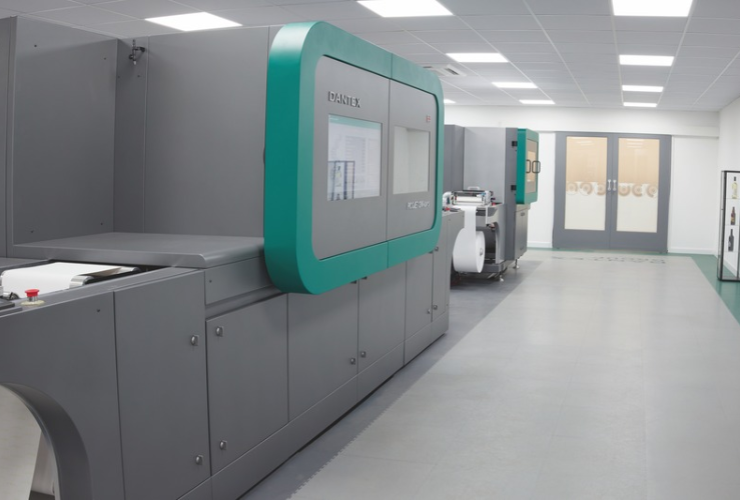
Dantex’s inkjet presses are able to print on a wide range of substrates, including PP, PE, OPP, PET, paper, and aluminium foil, and customers are not limited when qualifying additional substrates for use on their systems. The Pico inkjet printers also use the latest LED UV ink technology, enabling users to meet the most recent compliance requirements for the packaging and label industry by avoiding CMR and SVHC substances.
Mr Michel continues: “In our experience, the majority of print jobs for a typical converter are already competitive on UV inkjet, with only very long runs likely to remain on conventional equipment in the future. We expect the decline in run lengths to continue further, driven by internal and external factors: ongoing supply chain optimisation; shorter time to market; and innovations that increase the number of SKUs while reducing run lengths.”
External factors like increases in raw material and energy costs, due to current uncertainties in global supply chains, will accelerate this transition to digital print, he said.
Operational impact
Conventional printers turning to digital do need to consider how the switch to a hybrid printing environment will impact upon their wider operational functions, says Mr Michel. “The entire organisation needs a clear vision of its future business, starting with sales, which must adopt a digital print mindset in order to clearly demonstrate where digital print adds value and is worth a price premium that pays off.
“The effects can be clearly measured in reduced working capital throughout the packaging supply chain, more integrated processing within a single production step, reduced obsolescence, and integrated value-added functions requiring increased use of variable data printing.”
Dantex recommends not simply replacing existing equipment with digital presses or adding digital printing to the shop floor, but rather rethinking pre-press and order processing — from order intake to shipping — in order to fully leverage the advantages of digital print and be prepared for a more digital future.
The decision as to which printing equipment will ideally support this development depends heavily on the converter’s process landscape and the nature of its typical applications. With PicoColour, PicoJet or a hybrid PicoJet, Dantex offers a comprehensive range of equipment to support these needs. What is important is to identify and invest in a right-sized digital or hybrid printing solution that reflects the actual need for flexibility, quick integration, and ease of use.
Such decisions should never be taken lightly, but a visit to Dantex’s digital facility in Corby allows prospective users the opportunity to get their heads under the bonnet of high-quality, British manufactured inkjet systems, and to talk in detail about the options and the calculations needed to validate such investment decisions with true experts of digital label converting.