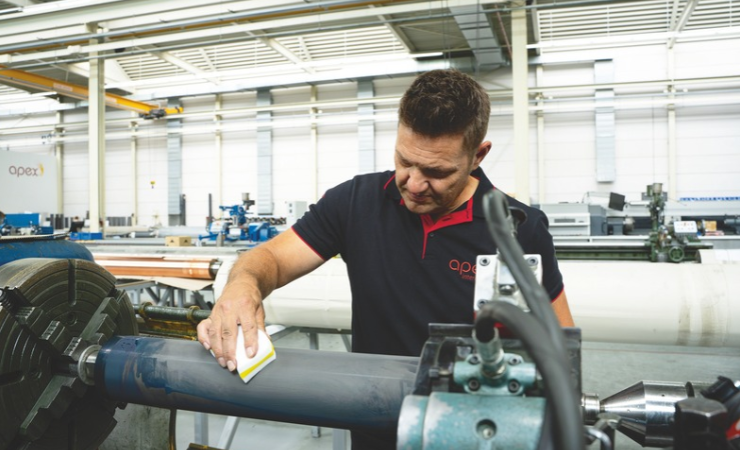
For decades, Apex International has helped flexographic printers improve print quality and process consistency through advanced anilox technology. As a global leader in anilox innovation, we understand that purchasing a high-quality anilox roll is only the first step. Maximizing its value requires the right maintenance strategy throughout its entire lifecycle.
Today’s flexographic printing environment places increasing demands on production. Shorter run lengths, tighter colour tolerances, more frequent job changes, and greater pressure to reduce waste mean every component of the printing process must perform consistently. At the centre of that process is the anilox roll.
Responsible for transferring a precise volume of ink or coating to the printing plate, the anilox directly influences print quality, colour consistency, coating performance, and production efficiency. While printers continuously optimize press settings, inks, plates, and workflows, the condition of the anilox itself is often overlooked. Yet protecting this critical asset is essential for maintaining stable production and maximizing return on investment.
The Hidden Cost of Contamination
Every printing process creates contamination. Whether using water-based inks, UV inks, coatings, adhesives, or specialty formulations, residues gradually build up inside the engraved anilox cells. Over time, these deposits reduce the effective cell volume and limit the anilox’s ability to transfer ink consistently.
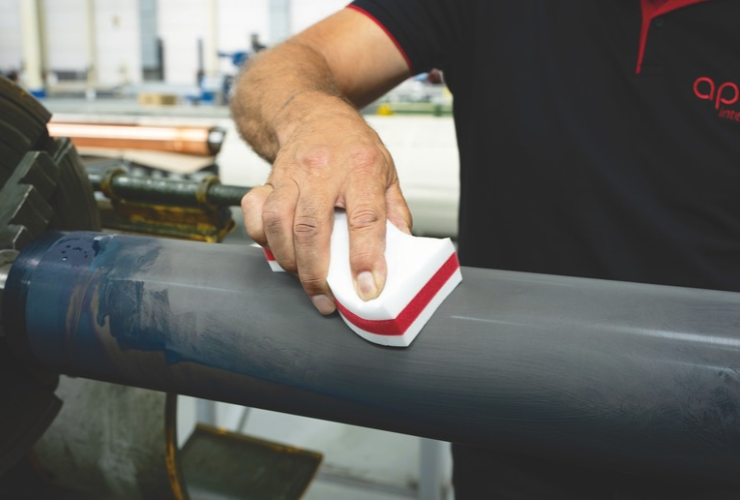 The effects are often subtle at first. Colour becomes more difficult to control, print quality becomes less predictable, and press operators spend more time making adjustments to achieve target results. As contamination continues to accumulate, reduced ink transfer can result in longer make ready times, increased waste, higher ink consumption, inconsistent print quality, and unnecessary downtime.
One of the biggest challenges is that these symptoms often appear elsewhere in the printing process. Operators may adjust ink formulations, doctor blades, or press settings without realizing that partially blocked anilox cells are the underlying cause.
Routine cleaning should therefore be viewed not as a maintenance task, but as an essential element of process control.
Why the Right Cleaning Strategy Matters
Routine cleaning is the foundation of effective anilox maintenance. When performed consistently with the correct cleaning chemistry, it prevents contamination from becoming deeply embedded in the cell structure and reduces the need for more aggressive restorative cleaning.
However, no single cleaning solution is suitable for every application. Water-based inks, UV inks, coatings, and adhesives all leave different types of residues, requiring different cleaning approaches. Selecting the appropriate cleaning chemistry is therefore critical for achieving effective results while protecting the anilox surface.
The Apex 360° Cleaning Liquids range has been developed specifically for these varying production environments. Rather than offering a one-size-fits-all solution, the portfolio includes formulations designed for different ink systems, contamination types, and cleaning requirements.
By matching the right cleaning liquid to the application, printers can improve cleaning efficiency, reduce maintenance time, and, most importantly, preserve the cell volume required for predictable ink transfer and consistent print quality.
Cleaning Is About More Than Chemistry
Although cleaning products play an important role, successful anilox maintenance goes beyond selecting the right liquid.
Every pressroom is different. Ink systems, substrates, print coverage, production volumes, and cleaning routines all influence how contamination develops and how it should be managed. A solution that performs well in one operation may not deliver the same results in another. This is where technical expertise becomes equally important.
Working with printers and converters worldwide, Apex has developed extensive knowledge of the relationship between anilox performance, ink transfer, print quality, and overall press efficiency. This enables us to help customers determine not only which cleaning solution is most appropriate, but also how often cleaning should be performed and how maintenance can be integrated into a broader process optimisation strategy.
In many cases, achieving better results is not about cleaning more often—it is about cleaning smarter.
A Complete Approach to Anilox Performance
Routine cleaning liquids are only one part of an effective maintenance strategy. To help customers maximise the performance and lifespan of their anilox rolls, Apex has developed the Apex 360° Cleaning Portfolio.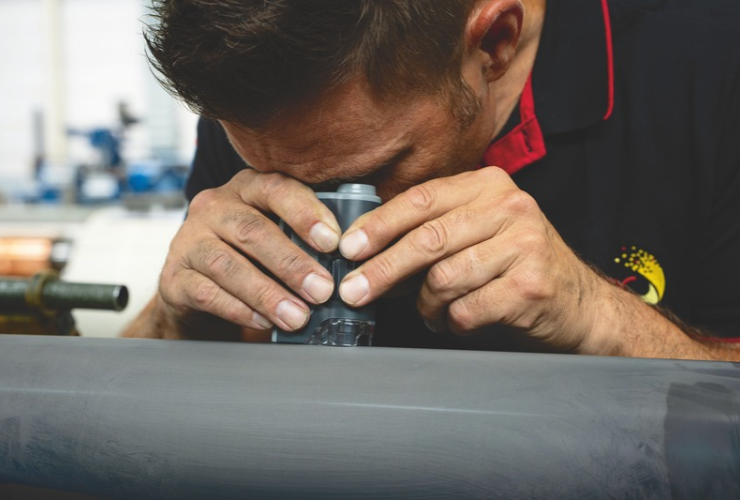
Alongside specialised cleaning liquids, the portfolio includes advanced cleaning equipment, professional cleaning services, and technical support. Together, these solutions help customers maintain consistent anilox performance throughout the entire lifecycle of their investment, from preventive maintenance to periodic deep cleaning and long-term process optimisation.
By combining the right products with expert guidance, printers can reduce downtime, improve process stability, extend anilox life, and achieve more consistent print results.
Protecting Performance
The role of an anilox supplier is evolving. Today, printers increasingly seek partners who can contribute expertise as well as products, helping optimise overall press performance rather than supplying individual components.
At Apex International, this philosophy extends beyond manufacturing industry-leading anilox rolls. Our objective is to help customers maximise the value of their investment throughout the entire printing process.
Effective cleaning is a key part of that commitment. It protects cell volume, supports consistent ink transfer, reduces waste, extends asset life, and helps ensure that every anilox roll continues to perform as designed.
Because maximizing the value of an anilox investment is not simply about choosing the right roll. It is about maintaining its performance, every day it is on press.