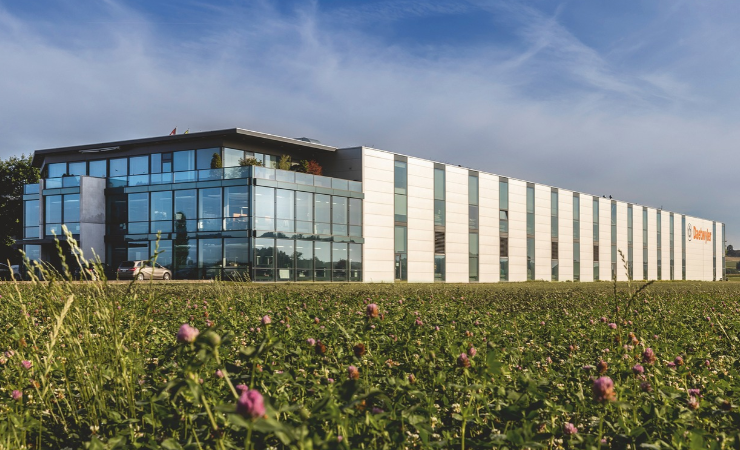
Three Generations of Precision: Daetwyler’s Evolution from Gravure to Flexo – and Beyond
Interview with Ralph Daetwyler, Third-Generation Owner
Daetwyler’s story is one of continuity, craftsmanship, and thoughtful evolution. Founded more than 80 years ago, the company has navigated major shifts in printing technology by staying grounded in technical excellence, long-term thinking, and people who understand the pressroom from the inside out.
In this conversation, Ralph Daetwyler reflects on the company’s generational transitions, the changing printing landscape, and why the recent acquisition of Cheshire represents not just growth–but stewardship.
Daetwyler has been around since 1943, but printing wasn’t where it all began. Can you tell us about the company’s early history?
That’s right. Daetwyler didn’t start in printing at all. After almost 20 years in the aviation business, my grandfather Max began developing machines for the gravure printing industry in the 1960s. At the time, gravure was a highly technical, precision-driven process, and that suited him perfectly.
As he introduced more machines for gravure cylinder manufacturing, the company grew steadily. Before long, the Daetwyler name became synonymous with quality and precision in the gravure space. In parallel, we began producing doctor blades–first for gravure, and eventually for flexo as well. That combination of mechanical precision and consumable technology really shaped the company’s identity.
How did the business evolve under your father’s leadership?
My father, Peter, represents the second generation, and he was instrumental in expanding Daetwyler into the global company it is today. Under his leadership, we established the worldwide footprint we still rely on.
One of the most important milestones during that period was bringing the first coated doctor blades to market. That innovation truly cemented Daetwyler’s reputation as a top technology provider, not just a manufacturer. It showed that we weren’t simply following industry trends–we were helping define them.
In 2009, Peter made another pivotal decision by selling the gravure machine-manufacturing part of the business to Heliograph Holding. That move allowed us to focus more clearly on pressroom products and support. Looking back, it was a decision rooted in focus and long-term clarity rather than short-term opportunity.
What was the business climate like during that transition, and how did it shape today’s company?
At the time, gravure was still dominant in many applications, but the early signals of change were already there. The industry was becoming more complex, more competitive, and more specialized. My father understood that focus would matter more than breadth.
By narrowing our scope and doubling down on pressroom technologies, we positioned Daetwyler to adapt as flexo continued to grow. That decision created the foundation we still build on today.
Now, more than 80 years after the company was founded, we continue to serve printers around the world. While we’re proud of our products, I believe our real strength lies in our people. We have dozens of technical specialists – many of them apprenticed pressmen–working directly on site with customers.
Without that deep, hands-on understanding of the pressroom, our products alone wouldn’t be enough.
You represent the third generation of leadership. How has your approach built on what came before?
One of the advantages of being a family business is that you don’t have to think in quarters–you can think in generations. My role hasn’t been to reinvent the company, but to extend its philosophy.
Several years ago, we began asking a simple question: What else can we offer in the pressroom that genuinely helps printers succeed? That question led us to expand carefully and deliberately.
In 2017, we acquired Rotoflex, a Swiss ink company specializing in food, pharmaceutical, and security printing. We also began manufacturing our own end seals. Anilox rolls were always an obvious next step. Given our gravure background, producing cylinders that transfer ink accurately is already part of our DNA. We understand micron-level precision and what it means to perform in demanding pressroom environments.
That brings us to Cheshire. Why was this acquisition the right move?
While we had the technical foundation, the real expertise in anilox lies at Cheshire. With over 30 years of experience under one roof, they’ve built an extraordinary depth of knowledge.
When the opportunity arose to bring Cheshire into the Daetwyler family, we didn’t hesitate. The acquisition wasn’t about scale for its own sake–it was about capability. Cheshire brings know-how, craftsmanship, and credibility that strengthens the entire group, while allowing our international sales teams to bring significantly more value to customer conversations.
It’s a true complement rather than an overlap.
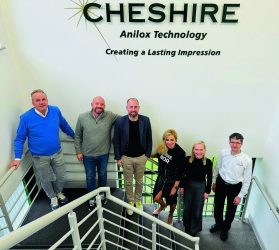
L-R: Olaf Segbert, Daetwyler SwissTec CSO, Ralph Daetwyler, Group CEO, Thomas Rother, Daetwyler SwissTec
CEO, Sonia Arcos Cheshire Anilox Tech Managing Director, Olga Smith Cheshire Anilox Tech Overseas Sales Manager
and Simon Gantner Daetwyler Group CFO.
What are the next steps now that the transaction is complete?
Unlike private equity or purely financial buyers, Daetwyler is a strategic buyer. We didn’t acquire Cheshire to cut costs, extract short-term profits, or maximize dividends. We have a clear technical and market-driven vision, and it’s very much a long-term one–designed to carry the company into the fourth generation and beyond.
We’ve already begun executing that strategy. In 2026, we will replicate the Dukinfield factory inside our Huntersville, North Carolina facility, which serves as our U.S. headquarters. Much of the equipment has already been ordered, and cross-training between teams is well underway.
In parallel, we have strong plans to expand the Dukinfield site, which will serve as our European anilox hub, supplying anilox rollers across Europe, the Middle East, Africa, and Asia.
At the same time, we’re activating our combined global agent and subsidiary network. The coming year will be about integration, learning, and ensuring that our people fully understand the Cheshire product line so they can support customers at the highest level.
You acquired Cheshire from founder Paul Smith. Did you discuss how the company should continue after the sale?
Absolutely–and those conversations started in our very first meeting. Paul often referred to Cheshire as his “life’s work,” and it was important to me that what we had in mind honoured that legacy before we ever moved forward.
My goal was not just to respect what Paul built, but to carry it into its next chapter. I have tremendous respect for what he created–not only a company with outstanding products, but a culture that closely aligns with ours. This wasn’t one company taking over another; it was two family businesses coming together.
That cultural alignment makes all the difference. Without it, building something lasting would be far more difficult.