
Polytag has announced a partnership with DataLase, a developer of laser-reactive technologies, aimed at expanding the use of GS1-compliant smart QR codes across a wider range of packaging materials.
The collaboration combines Polytag’s QR code management platform with DataLase’s coding and marking technology, enabling manufacturers to apply QR codes across packaging formats that have traditionally been more difficult to mark. These include plastics, films, foils, metals and coated surfaces. The companies said the technology is designed to support connected packaging initiatives, help brands prepare for regulatory changes such as Digital Product Passports, and provide consumers with access to digital information through a single QR code.
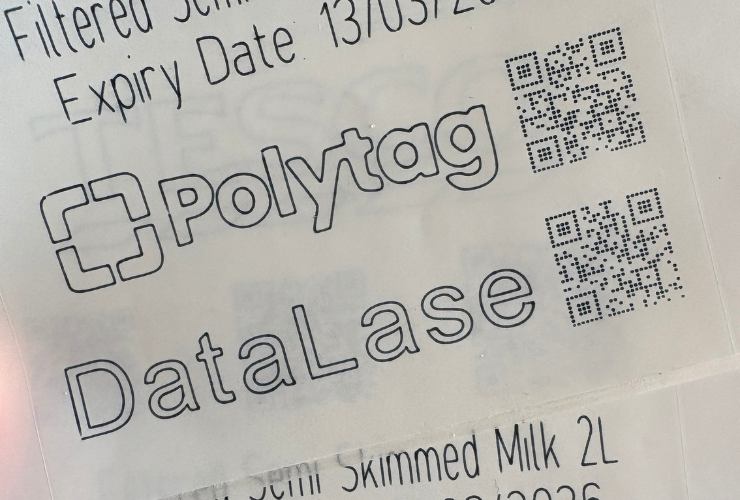
DataLase’s technology uses laser-reactive coatings that are applied during label production alongside packaging artwork. During manufacturing, a laser activates a pigment within the coating to create a permanent QR code without the need for additional ink or consumables.
 “For connected packaging to truly scale, brands need to be able to deploy advanced QR codes across every packaging format,” said Alice Rackley, CEO of Polytag. “This partnership is making that possible at production-line speed.”
Clare Lewis, CEO at DataLase, said: “Retailers and brands are navigating new product regulations while simultaneously looking for new ways to engage their customers. Together with Polytag, we’re helping manufacturers transform their labels into something genuinely interactive – with complete flexibility and total confidence in the printing process.”
According to the companies, the QR codes can integrate with existing retail supply chain and recycling infrastructure while also providing a digital connection between brands and consumers. Through a single code, brands can direct consumers to product-specific information, care instructions, expiry dates and marketing content. Information can be updated in real time through the Polytag platform and adapted for different languages and locations without requiring changes to packaging.
The companies said the technology could also support efforts to reduce food waste and improve product safety. QR codes carrying batch, expiry date and serial number information can facilitate stock rotation, enable batch-level recalls and provide additional transparency across supply chains.
The partnership comes as the retail sector prepares for a broader transition to QR codes. GS1 member organisations are targeting 2027 for the adoption of QR code-enabled retail point-of-sale systems under the Sunrise 2027 initiative.
The development also aligns with the European Union’s Ecodesign for Sustainable Products Regulation (ESPR), which is expected to introduce mandatory Digital Product Passports across multiple product categories for businesses selling into the EU market from 2027 and 2028.